The Ledger and the Shelf: Five Stockroom Lessons From Kenya's Pharmacies for US Healthcare Supply Chains

Photo: independent pharmacy shelves medicine inventory pharmacist counter Africa, via logolook.net
Walk into an independent pharmacy in Kiambu or Kisumu and you will find a stockroom that would give a US supply-chain director a mild headache: partial packs, handwritten ledgers, a mobile-money float that dictates what can be ordered this week, and a pharmacist who knows which regular customer needs which medicine before the prescription is unfolded on the counter.
It is also, by several measures, a more resilient operation than many American equivalents. Stockouts are frequent but rarely fatal, substitutions happen constantly but rarely silently, and demand information is captured in a form that survives a power cut. For US healthcare supply-chain leaders navigating their own shortages and margin pressure, five practices are worth translating.
1. Substitute Deliberately, Never Silently
When a Kenyan pharmacy does not have the prescribed brand, the substitution is a conversation, not a quiet swap. The pharmacist explains the alternative, confirms the prescriber's intent where it matters, notes the change on the package and in the ledger, and records who authorized it. The paperwork looks primitive. The control is not.
US healthcare systems substitute constantly — therapeutic interchange, formulary shifts, backorder-driven equivalents — and the documentation often lags the decision. The Kenyan pattern suggests a simple standard: every substitution should carry a named decision-maker, a stated reason, and a record that a clinician or patient can reconstruct. The lesson is not more forms. It is that the substitution event, not the purchase order, is the audit point.
2. Keep a Second Ledger for Demand You Could Not Meet
The most valuable record at a Kenyan pharmacy counter is often the one that tracks what customers asked for and did not receive. That log tells the owner which items to order, which competitors are absorbing the demand, and whether a recurring request is a signal or an anomaly. It is a lost-sales register, maintained by hand, and it drives ordering more reliably than any forecast.
Most US supply chains measure fill rate and treat unmet demand as a single aggregate number. It is not. An unmet request from a repeat prescriber in a specific therapeutic area is a different signal from a one-off inquiry, and only the first should change an order quantity. Frontline capture of unmet demand, tagged by reason, is one of the cheapest forecasting improvements available — and Kenyan counter staff have been doing it for decades without a dashboard.
3. Treat Working Capital as a Supply Constraint
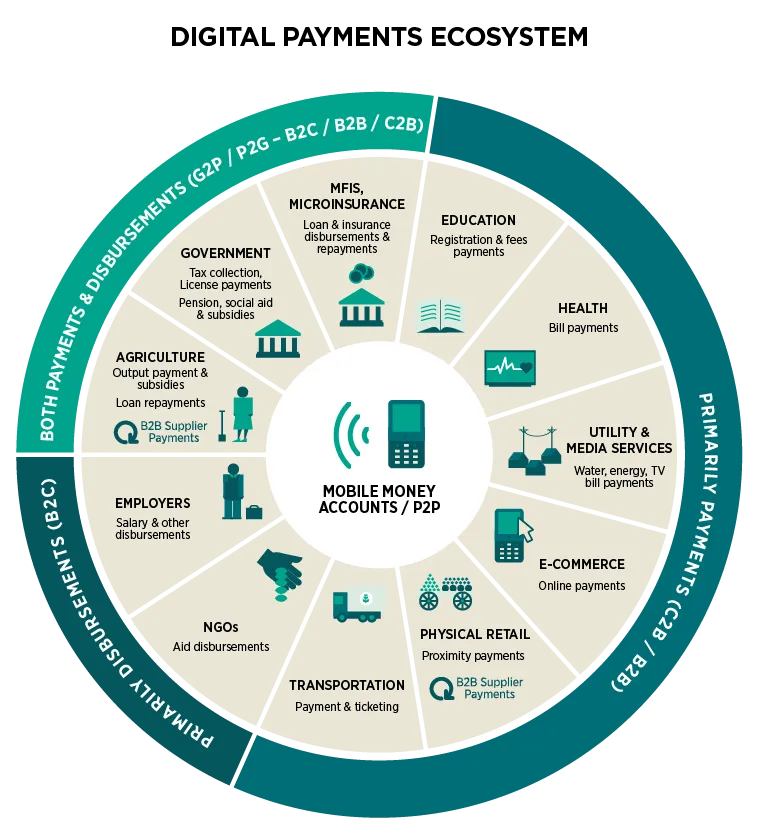
In Kenya, the order is bounded by the mobile-money float, not by the shelf. A pharmacy that can settle a wholesaler instantly will receive stock the same day; one that cannot will wait, regardless of demand. The consequence is tight, disciplined order sizing: smaller quantities, more frequent replenishment, and an acute awareness of which items earn their place in the cash cycle.
US healthcare organizations face the same constraint in a different costume. Carrying costs, capital charges, and storage limits make large order quantities expensive even when they look efficient on a unit-price basis. The Kenyan discipline argues for smaller, more frequent replenishment of high-velocity items and deliberate deferral of the long tail, with stock levels set against cash and shelf space rather than annual volume discounts. The cheapest unit price is not the cheapest inventory position.
4. Let the Counter Set the Reorder Point
In Kenyan pharmacies, reorder decisions sit with the person who faces the customer. The pharmacist knows that the local clinic changed a protocol, that a school term has started, or that a seasonal illness is arriving. That knowledge reaches the order book directly, without a central planning layer to validate it away.
US systems tend to concentrate reorder authority in planning teams because it produces consistency. It also produces latency, and latency is precisely what local knowledge cannot survive. A practical middle ground familiar from Kenyan practice: centrally set the parameters, locally trigger the exception. Give frontline managers the authority to raise an order within a defined band, and audit the decisions afterward rather than pre-approving them.
5. Design for the Stockout You Will Certainly Have
No Kenyan pharmacy plans on full availability. Availability is assumed to be intermittent, so contingency is embedded in daily operations: known alternatives, a network of nearby pharmacies for referral, a habit of telling the patient honestly what is unavailable and when it will return. The stockout is managed as a customer-communication event as much as a supply failure.
US healthcare supply chains, trained on high fill rates, often treat stockouts as exceptions that should not require protocol. They then improvise under pressure, which is when clinical workarounds become inconsistent and expensive. The Kenyan approach inverts the priority: assume the gap, pre-approve the alternates, script the patient conversation, and rehearse the escalation. A shortage handled with a prepared playbook costs a fraction of one handled by improvisation.
What Transfers, and What Does Not
The honest caveat is that Kenya's pharmacy model runs on constraints US organizations do not face and should not manufacture: paper where power is unreliable, cash float where settlement is instant, neighborhood knowledge where patient populations are stable. The practices worth importing are the disciplines those constraints produced — substitution accountability, lost-demand capture, cash-aware order sizing, distributed reorder triggers, and stockout readiness.
None of them require a new platform. All of them require trusting the counter with more judgment than most US supply chains currently allow. The ledger is not the interesting part. The habit of writing in it is.