Agent Networks and the Architecture of Inclusion: What M-Pesa's Rail Teaches US Fintech Builders
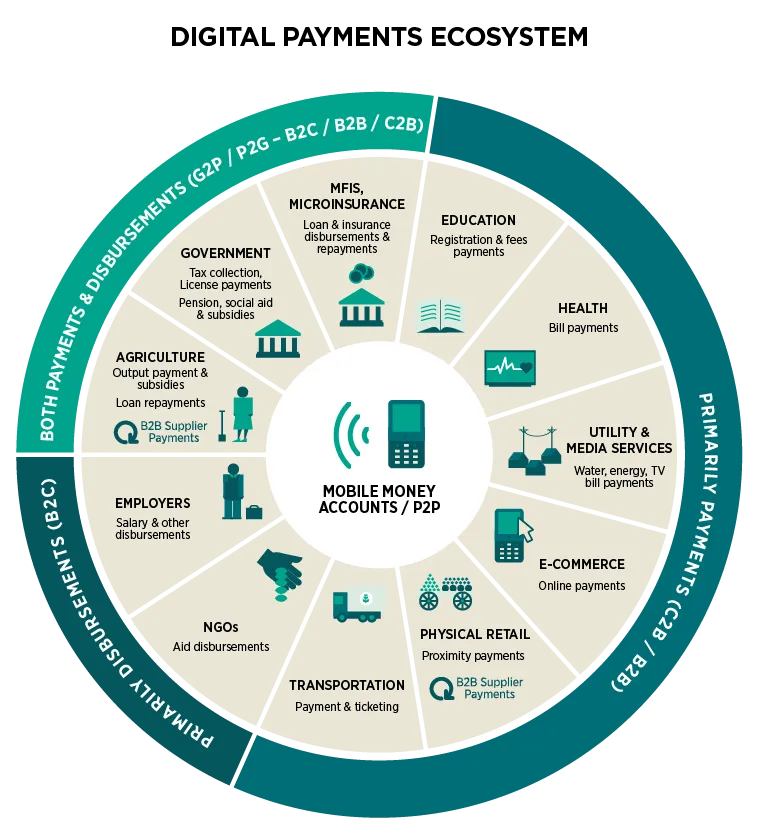
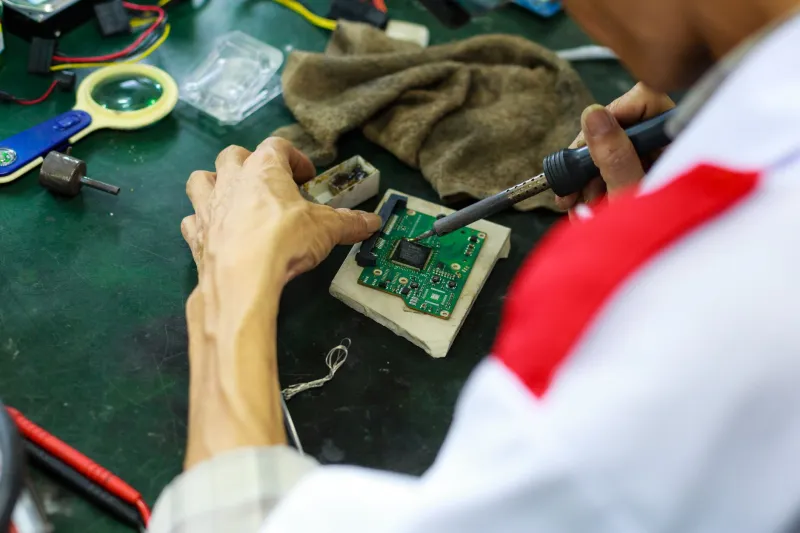
Photo: Le gracié, CC BY-SA 4.0, via Wikimedia Commons
American fintech has spent the past decade competing on the interface layer. Better apps, cleaner dashboards, faster onboarding, more elegant cards. Those improvements matter, but they have not solved a stubborn problem: millions of US households still operate outside the comfortable edges of the banking system. They cash checks at storefronts, pay bills with money orders, and manage irregular income with tools that feel provisional. The challenge is not creating another account. It is converting digital balances into usable cash and building trust among customers who have good reason to distrust financial institutions.
That is why Kenya's M-Pesa remains a useful reference, even for firms that will never operate in East Africa. Launched in 2007, M-Pesa did not win by out-designing banks. It won by building a rail around the realities of cash, distance, and trust. For US fintech leaders, the lesson is not to copy a Kenyan product wholesale. It is to study the architecture beneath it.
A Rail Built Around Cash, Not Cards
M-Pesa's central insight was simple: a digital balance is only useful if it can move into and out of cash easily. The agent network—small shops, kiosks, and local merchants—became the physical endpoint for deposits and withdrawals. Customers did not need a bank branch, a card, or a smartphone with a sophisticated app. They needed a nearby agent with enough float and a reliable connection.
US fintech often treats cash as a legacy inconvenience. But for underbanked Americans, cash is not legacy. It is how wages, tips, remittances, and informal work get settled. A digital wallet that ignores cash conversion excludes the very people it aims to serve. The practical lesson is to design around cash endpoints, whether through retail partnerships, employer payroll integrations, community banks, credit unions, or check-cashing locations. The endpoint is not a distribution afterthought. It is part of the product.
Distribution Is the Product
In many US fintech models, distribution is marketing. A firm builds the product, buys user acquisition, and then hopes the experience sticks. In inclusion-focused markets, distribution is operational. Agents must be trained, monitored, and supplied with liquidity. Fraud must be detected at the point of transaction. Customer support must work in the customer's language and at the customer's level of digital confidence.
That changes the economics. It also changes the design brief. Assisted onboarding, simple ledgers, printed receipts, and human help are not signs of a less sophisticated product. They are signs of a product built for the actual customer journey. US firms experimenting with community banking partnerships or employer-based financial tools can borrow this discipline: put the service where the cash already changes hands, then design backward from that moment.
Regulation as a Design Constraint
M-Pesa's growth also depended on regulatory navigation. The service did not emerge from a vacuum of rules; it emerged through iterative engagement with regulators, banks, and telecom authorities. That history is often flattened into a single sentence about light-touch regulation. The more useful reading is that regulatory strategy was product strategy. Licensing, know-your-customer requirements, transaction limits, and consumer protection shaped what the service could become.
US fintech operates in a different environment: state money transmission licenses, federal banking oversight, anti-money-laundering rules, and a patchwork of consumer protection expectations. That complexity is real. But it is not an excuse to treat compliance as a back-office cost. Firms that engage regulators early, use sandboxes where available, and design compliance into customer workflows tend to move faster later. The M-Pesa lesson is not that regulation is absent. It is that regulation must be negotiated as part of the build.
What US Fintech Should Borrow—and What It Should Not
The borrowable elements are clear: cash-conversion endpoints, assisted digital journeys, agent or partner liquidity management, simple transaction records, and a distribution model that treats local operators as critical infrastructure. The non-borrowable elements matter just as much. M-Pesa grew in a market with limited fixed-line banking reach and a dominant telecom operator. The US has deep card, automated clearing house, and real-time payment rails, along with mature fraud controls. Copying the surface of M-Pesa without adapting to US rails would be a mistake.
There is also a caution about romanticizing constraint. Scarcity can produce disciplined design, but it can also produce gaps in consumer protection. US fintech builders should borrow the discipline, not the gaps. The goal is an inclusive rail that still meets American expectations for dispute resolution, transparency, and data security.
The Kenya DT Takeaway
For US firms, Kenya is less a market to imitate than a design classroom. The M-Pesa experience shows that inclusion is an architecture problem: where cash lives, who holds it, how trust is verified, and how regulation shapes the workflow. Fintech leaders who treat those questions as core product decisions will build more durable services than those who keep polishing the app layer and hoping the underbanked customer arrives.
The playbook is not a copy-paste. It is a discipline: start with the cash endpoint, design for assisted trust, and treat regulation as part of the product. That is how a rail becomes infrastructure.